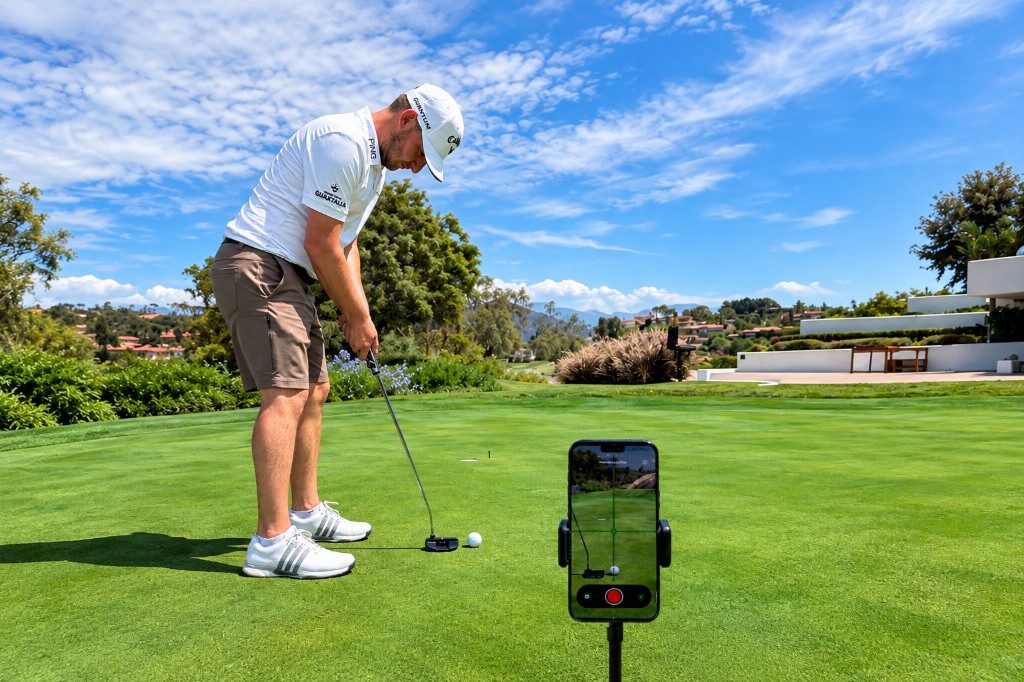


A golfer at dawn addressing a ball on a putting green, with a phone on a small tripod recording the putt

Your first Combine is free.
Eighteen real putts.
No demo mode.

Set your phone behind the ball. Take eighteen putts. Woosh tells you why each one missed and gives you one score that means something.

The capture moment

Set the phone. Make the putt. That's the whole capture.

The camera goes behind the ball. You hit the putt the way you'd hit any putt. Woosh records the seven seconds that matter and discards the rest.

Most golfers are set up in under thirty seconds the first time. Ten seconds the fifth.

A phone on a small tripod recording a putt at dawn, with the Woosh capture interface visible on the screen
Hands holding a phone showing the Woosh result panel — eight small metric blocks arranged in a grid with one hero metric pill at the top
The diagnosis

One clear fault. Six places putting actually breaks.

Every Woosh putt resolves to one diagnosis from six buckets — Read, Aim, Contact, Start Line, Speed, or Good Process. The buckets are the priority order Tour coaches teach in: if your read is wrong, every signal underneath is being measured against the wrong target. Woosh names the one that mattered most on this putt and stops there.

Underneath the diagnosis sit eight signals the engine actually computes — make-or-miss · speed · read · break · contact · start line · putter path · finish point. Same eight every putt. The diagnosis is the headline. The signals are the work it shows.

A phone at dusk showing the bird's-eye replay — a glowing violet trace curving from the start point to the cup

Watch the path your ball actually rolled.

A second view, animated, taken from above. The line your ball drew across the green, replayed in three seconds.

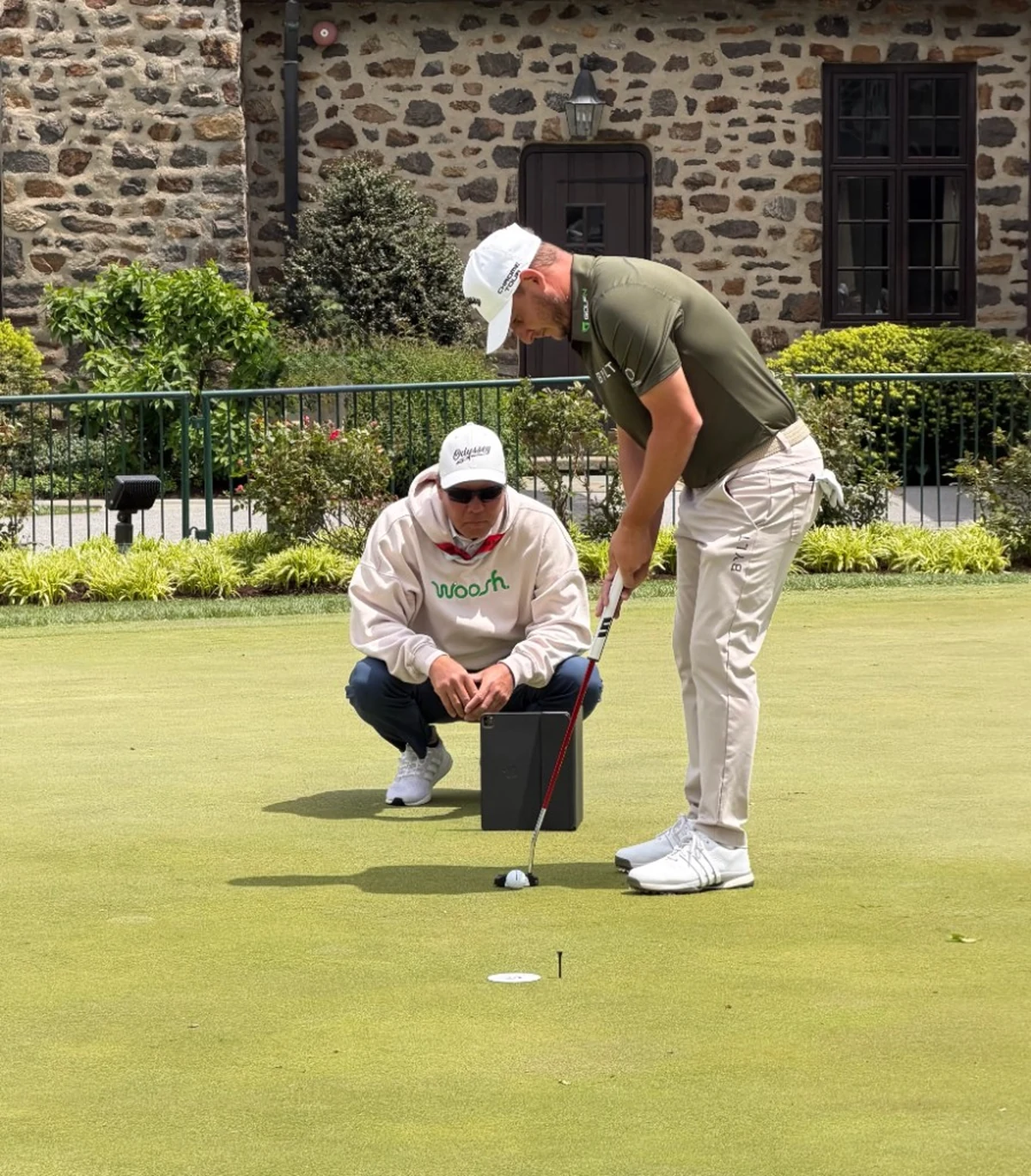
A coach inside a pro shop reviewing a Woosh session on a tablet — a top-down green diagram with a violet trace and metric blocks visible on the screen
Built with Tour calibration

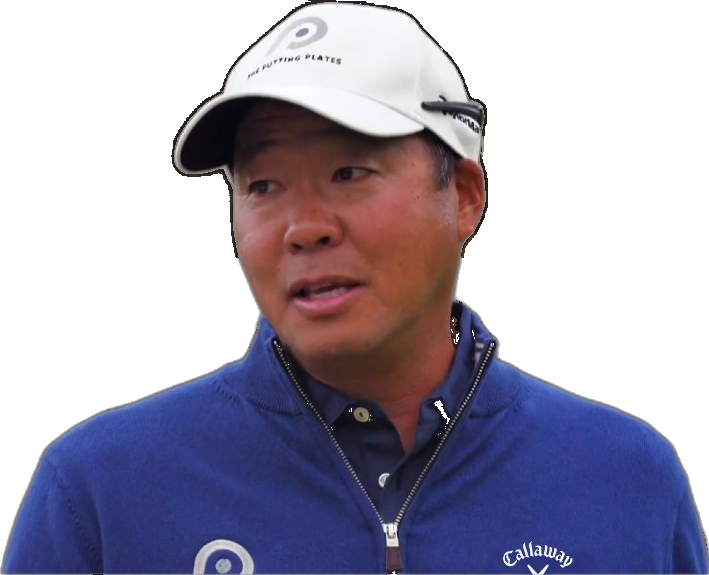
Built with PGA Tour Coach Derek Uyeda.

Every read in Woosh's analysis is calibrated against the same rubric Derek Uyeda — Xander Schauffele's putting coach — uses with players on the PGA Tour. Coach Mode lets you share full sessions with your local pro between in-person lessons. Your coach sees what you saw.

The Woosh Combine

Take the test. Know your game.

Make rate over a single round tells you nothing. The greens were faster. You got cooked on the breakers. You drained a lucky one. The Combine fixes the test. Same eighteen putts. Three stations. Same scoring rubric every time.

The number you finish with is comparable to the one you finished with three weeks ago. The drift between them is signal, not noise.

Three stations · Eighteen putts01 / 02 / 03
Three Combine stations rendered as a stylized low-poly green: a five-foot station, a fifteen-foot station, and a slight-breaker station, with six putt markers under each
~5 ft
6 putts
~15 ft
6 putts
Breaker
6 putts
Sample Combine score78/100
A low-poly illustration of hands holding a phone showing the Woosh putting handicap number above a downward-trending trend chart, with a dawn-lit practice green and flagstick in the background
Last 10 Combines
7284
Putting Handicap

A putting handicap. Like GHIN, but for the green.

Every golfer knows their handicap. Two seconds to read. Universally understood. Putting has never had one — until now. The Woosh Putting Handicap is built like GHIN: best 5 of last 10 Combines, averaged, then ninety minus that average.

Lower is better. Zero is scratch. Plus is elite. Most golfers are a different number than they think.

A solo practicer mid-routine on an empty practice green at late afternoon, putter in setup, a notebook on the grass and a phone on a small tripod nearby

A Tuesday in March.

Sarah practices putting four nights a week. She is not on a tour. She is a 13-handicap who works in software and treats the practice green the way she treats the gym — show up consistently, do the reps, expect the numbers to move. They aren't moving. She tracks her make rate from 8 feet in a notebook. Three months of practice, ninety-six sessions, an average that's wandered between 28% and 33%. She can't tell whether she's getting better, worse, or stuck. The notebook has dates and percentages and nothing else. She has no idea, on any given Tuesday, whether the bad night is a real regression or just variance. She has no idea whether her contact has drifted, whether her speed control is the issue, whether her start line is the problem. The notebook is full and the data is empty.

A phone screen glowing with a Woosh celebration — a soft amber halo, a green dot at center, scattered confetti shapes
The offer

Eighteen real putts. Free.

No card.

The first Combine you record on the practice green gets full Woosh analysis. Eighteen putts. The per-putt diagnostic on each. Sub-scores out of one hundred. Your first step toward a Putting Handicap.

Pro unlocks unlimited Combines, the established Handicap, tendency tracking, and Coach Mode. Until then — keep the data.

iOS · Android · Pro and Elite tiers at /signup

An honest note

What this isn't.

Woosh doesn't replace your coach. It doesn't grade your full swing. It doesn't track shots from the tee or the fairway. It doesn't tell you which putter to buy or which grip is correct for you. It tells you what happened on the putts you recorded — one diagnosis, eight signals, a replay, an overlay — and trusts you and your coach to do the rest.

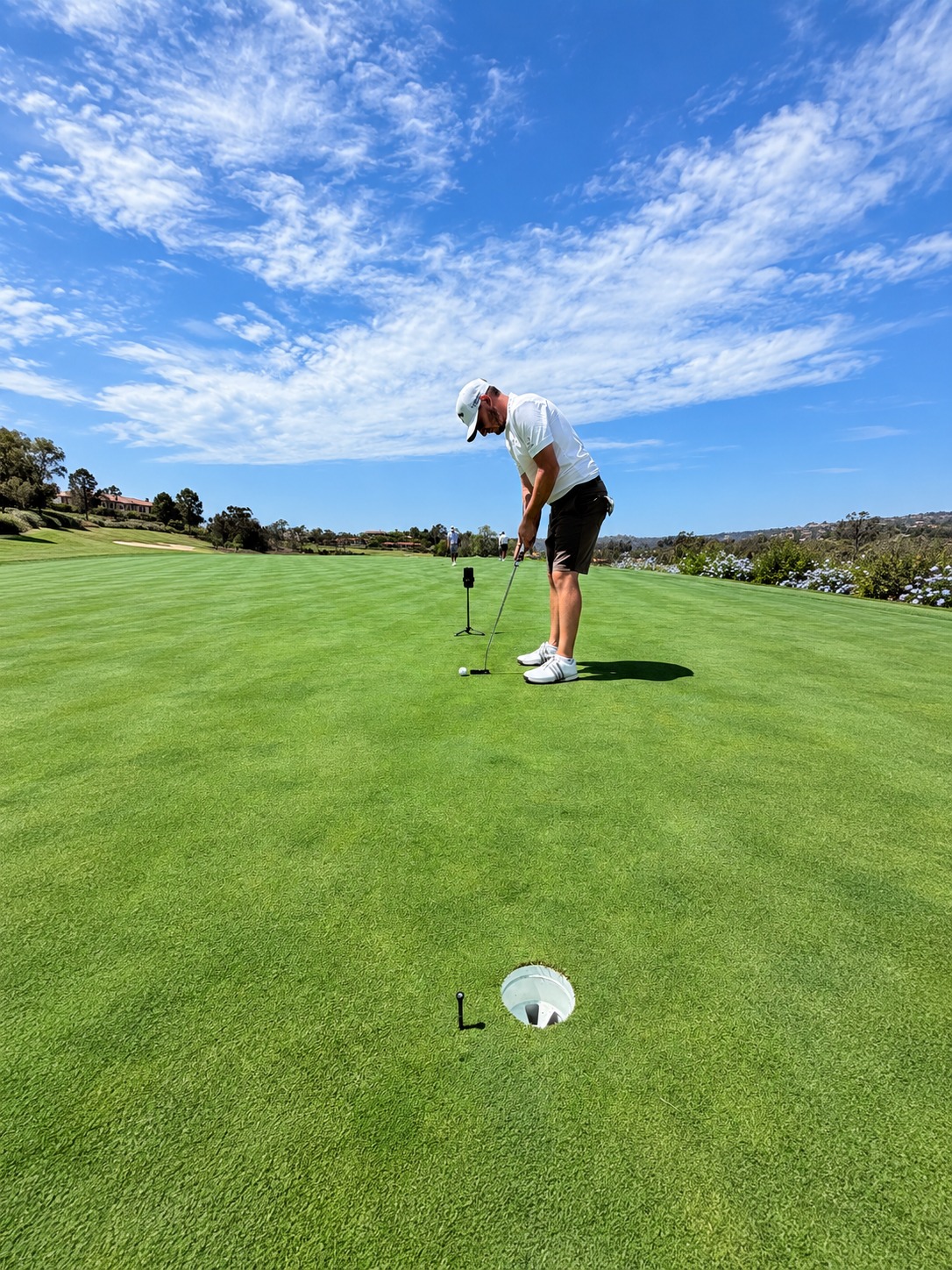
A golfer at dawn addressing a ball with a phone on a tripod recording behind it — bookend of the page

Set the phone behind the ball.

Take your first Combine free